
Executive Privilege for Everyone!
Justice Department attorneys have issued a new slip opinion after hours on a Monday, hoping no one will notice that Donald Trump is attempting to rewrite the law...again.

A new memo from the United States Department of Justice appeared overnight, which attempts to give President Donald Trump sweeping new authority to hide his communications with anyone from public view, allowing anyone who Trump designates to be an “adviser” to shield their communications from the public or Congressional inquiry.
The memo, signed by Assistant Attorney General T. Elliot Gaiser, defines “private advisers” broadly in an attempt to include anyone who speaks to the president at any time. Gaiser also makes a specific point to enumerate all of the many ways that would constitute this new Trump-imposed caveat of protected communication.
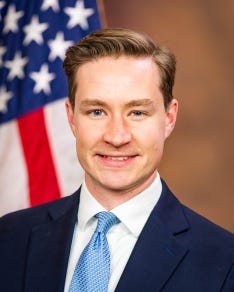
“For the purposes of this memorandum, we use the term ‘private advisers’ to include anyone the President consults outside the Executive Branch, whether they be members of the public, state officials, or employees of other branches of the federal government,” pontificates Gaiser, as he attempts to grossly manipulate Constitutional law principles to suit Trump’s site-specific immunity needs.
There are several reasons why the Trump administration would literally attempt to create privilege doctrine out of thin air, and the impending power shift in November as Democrats attempt to take control of both the US House and Senate is first among them. When the Democrats regain power after the November midterms, they will immediately launch investigations into the Trump administration and issue subpoenas for everyone who has been in contact with Donald Trump, or even just in his orbit.

The memo, frantically issued by the Justice Department’s Office of Legal Counsel last night, attempts to rewrite the boundaries of presidential executive privilege, just in time for the Democrats in Congress to start issuing subpoenas in the fall. While this new legal guidance is not legally binding, it will give the Trump administration an argument in the Courts for delaying compliance. While this new directive may not be legally binding in the long run, it will serve its short-term purpose — to tie up the subpoenas and delay any testimony or fact-finding long enough for Trump to find another excuse.
Another reason for issuing this legal protocol for the Department of Justice is to serve as a roadmap for where the agency is heading in terms of defending or pursuing legal cases. The Trump administration recently responded to a lawsuit filed by the American Bar Association (ABA) in which Trump’s Department of Justice brazenly subpoenaed law firms in an attempt to block the ABA’s request for communications between the White House and Trump’s outside lawyer Boris Epshteyn.
Executive privilege has long been asserted for lawyers directly employed by the White House, but this new opinion concludes that executive privilege can apply to presidential communications with private advisers so long as three things occur: “the conversation relates to official presidential decision-making; involves or reflects communications with the [p]resident or his direct advisers, and the communications are confidential.” The impending ABA case, which is headed to the US Supreme Court on appeal, deals directly with this issue.
On July 21st, a three-judge panel of the US Court of Appeals for the District of Columbia Circuit upheld the convictions of Peter Navarro, former senior White House aide in President Donald Trump’s first administration. In United States v. Navarro, that DC Circuit panel reaffirmed that the president alone holds executive privilege, and that a mistaken belief of non-compliance with a congressional subpoena will not defend against contempt of Congress charges.
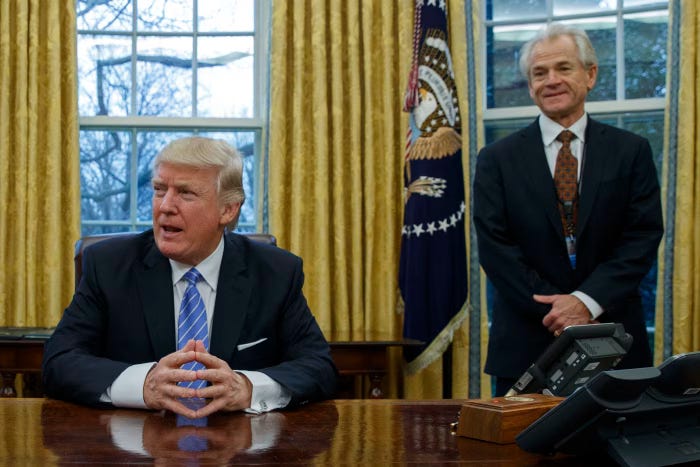
The convictions involved two counts of criminal contempt of Congress and held that “privilege must be claimed by the [p]resident (current or former) or an official authorized by the [p]resident to claim it.” The panel court also rejected Navarro’s argument that his good-faith mistaken belief that executive privilege was invoked could excuse his non-compliance with a congressional subpoena, based on the legal definition of “willfulness” under Section 192, which requires only a deliberate default, not a correct understanding of the validity of the subpoena.
This opinion significantly raises the stakes surrounding both the assertion of executive privilege and decisions regarding compliance with congressional subpoenas. Given the potential shift of political power in Congress this fall, this slip opinion could serve as a last-ditch effort to stave off prosecutions while Donald Trump is still in office and still able to persuade Americans that he is being unjustly prosecuted. As for proof that Donald Trump is aware of the stakes in November and is closely paying attention to what is coming and making his own plans, there you have it.
Amee Vanderpool writes the SHERO Newsletter and is an attorney, published author, contributor to newspapers and magazines and analyst for BBC radio. She can be reached at avanderpool@gmail.com or follow her on Twitter @girlsreallyrule.
Paid subscriptions allow me to keep publishing critical and informative work that is sometimes made available to the public — thank you. If you like this piece and you want to further support independent journalism, you can forward this article to others, get a paid subscription if you don’t already have one or send a gift subscription to someone else today.