
What Does "Headed for a Shutdown" Really Mean?
It looks as though the United States is headed for a federal government shutdown, as Democrats dig in their heels to protect healthcare funding, leaving some to wonder where to go from here.

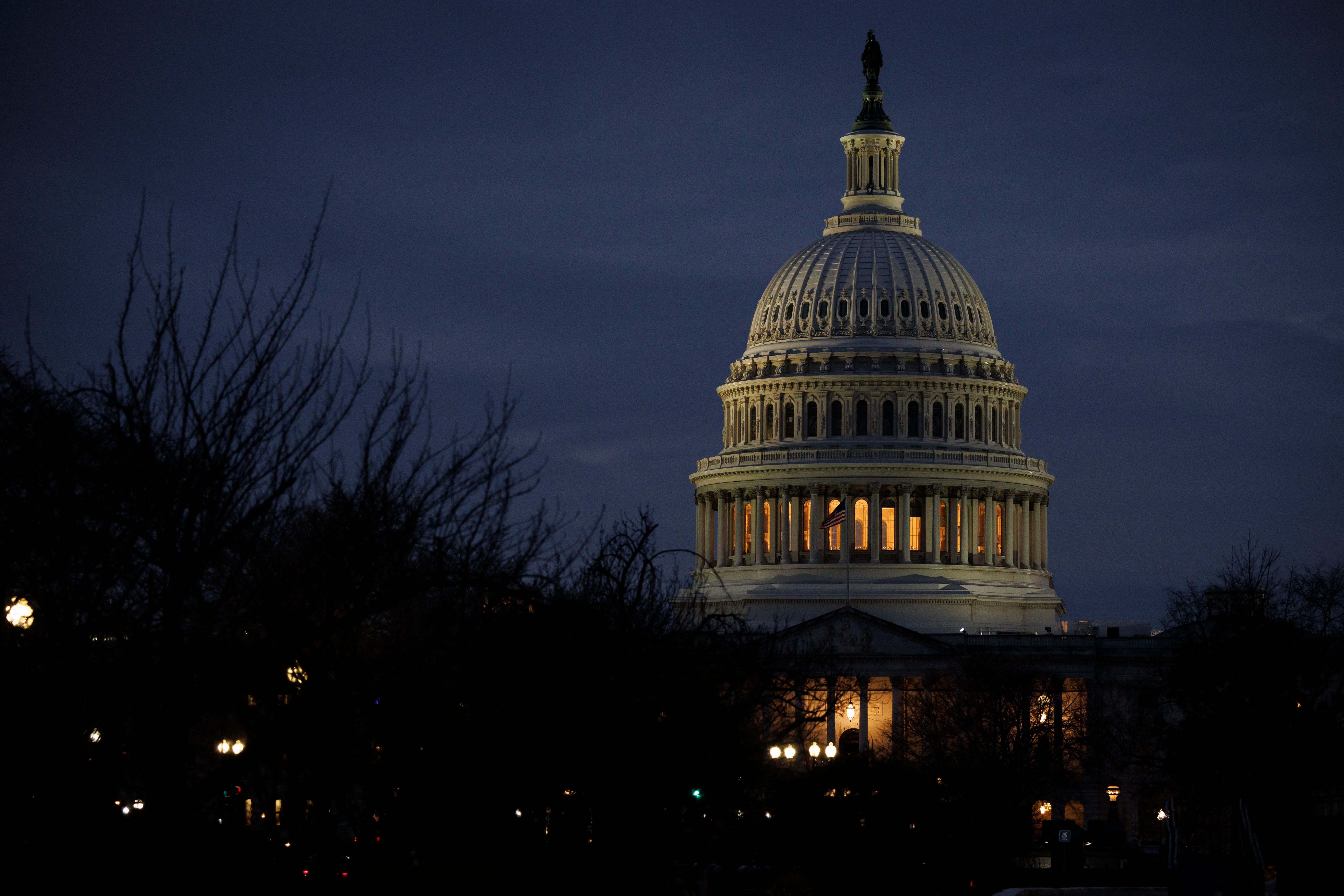
The federal government, under the leadership of Donald Trump and Republican Speaker Mike Johnson, is set to shut down in a few hours for the first time since Donald Trump’s first term in 2018. The battle between Republicans and Democrats primarily stems from Senate Democrats’ refusal to support the spending bill proposed by Republicans, which would allow Affordable Care Act (ACA) subsidies to expire at the end of the year.
Democrats are also looking to repeal cuts to health care programs that were enacted by the GOP’s tax and spending bill passed earlier this summer, which have created immediate gaping holes in states’ health care budgets. Meanwhile, Republican leaders are furiously attempting to sell the idea that Democrats have an obligation to support their measure to extend federal funding at current levels through Nov. 21, and provide $88 million in added security for top government officials. Vice President JD Vance even went so far as to cast blame on liberal politicians who are focused on protecting the health care of millions, saying: “I think we’re headed to a shutdown because the Democrats won’t do the right thing.”
The ACA subsidies, or enhanced premium tax credits, have been in place since 2021. In 2025, approximately 22 million people with a health plan through the ACA marketplace received a premium tax credit based on their income to afford health insurance. This number accounts for the majority of all ACA participants, as approximately 24 million people are enrolled on the health insurance exchange in total. If these “enhanced premium tax credits” are not extended for 22 million Americans, average premiums are expected to rise by 75%, which equates to more than $700 in additional premium payments per year. Failing to extend the ACA subsidies would create a “subsidy cliff” that would force millions of people to go without health insurance altogether.
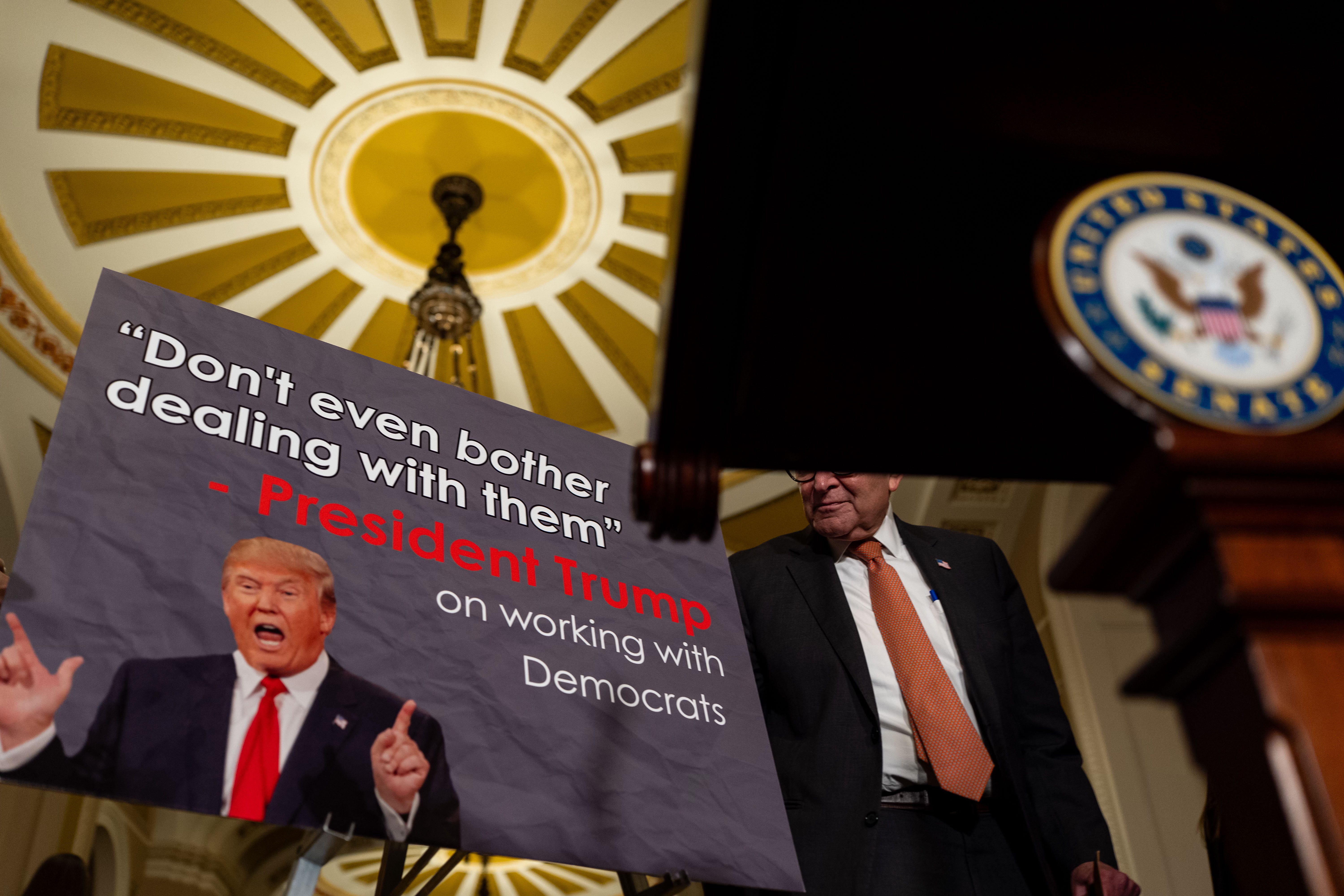
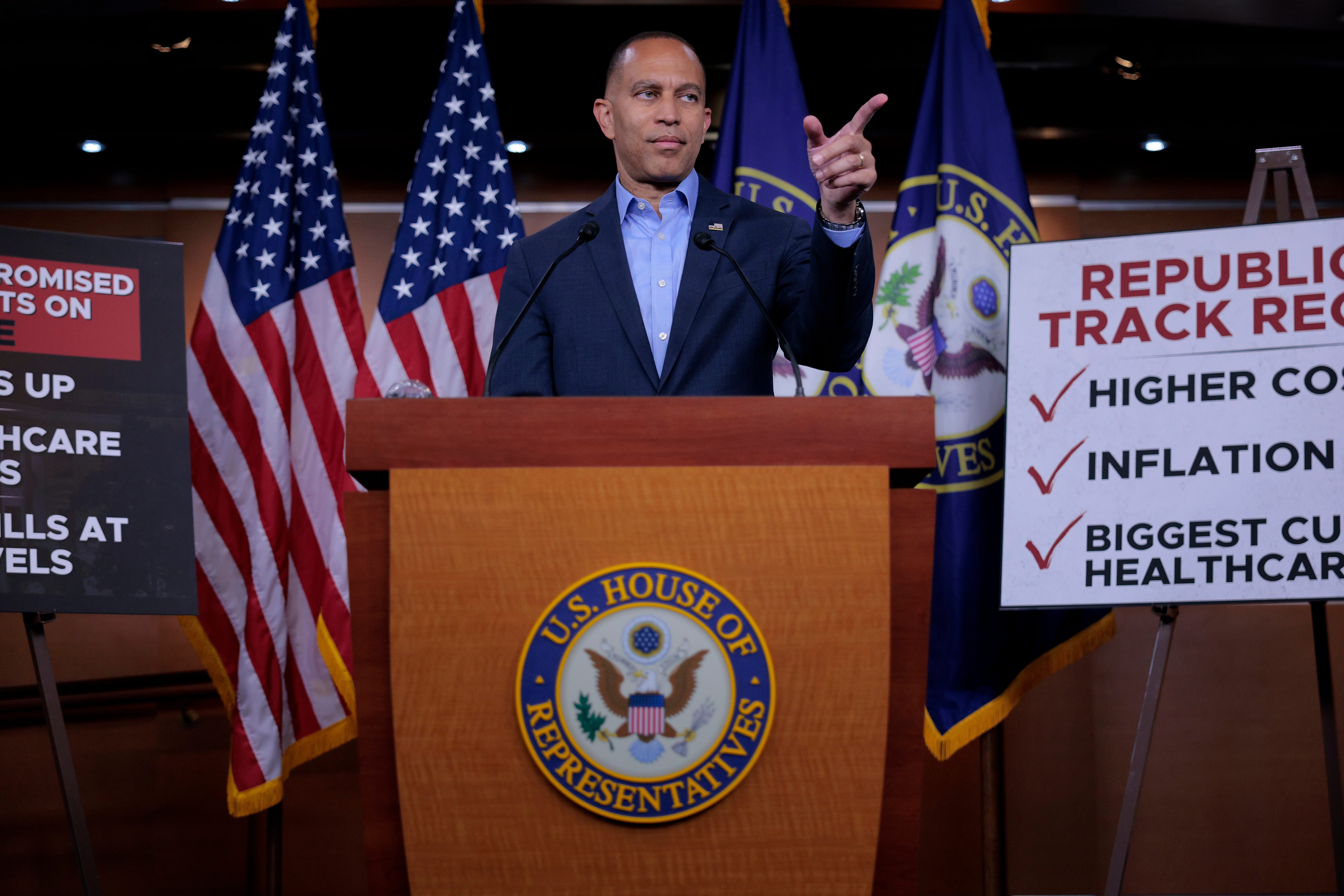
Few believe that Democrats are ready to yield to the outlandish requests of the Republican Party, as evidenced by the Trump administration’s disastrous meeting at the White House with leadership yesterday. House Speaker Mike Johnson (R-LA), Senate Majority Leader John Thune (R-SD), Senate Minority Leader Chuck Schumer (D-NY), and House Minority Leader Hakeem Jeffries (D-NY) all met with Donald Trump at the White House on Monday in hopes of reaching an agreement.
To say the session was a complete waste of time is putting it mildly. Trump went on to taunt Democrats after the meeting and posted a racist AI-generated video on social media that included mariachi background music with an image of Leader Jeffries with a sombrero and a drawn-on mustache. Next to Jeffries in the video was a fake version of Leader Chuck Schumer making vulgar and crude deep-faked VoiceOver comments that denigrated Democrats. (I am posting the video here so that no one has to go to the link on Truth Social and give Donald Trump another click.)
Jeffries dismissed the video in a social media response, saying, “Bigotry will get you nowhere. Cancel the Cuts. Lower the Cost. Save Healthcare. We are NOT backing down.” Earlier in the day, Conservative John Thune got his pre-meeting dig in through the media by telling reporters that Democrats were “hijacking” the process by pushing to correct the ACA issue, which he claims should be dealt with on a “separate track.” Thune also made the nonsensical argument that because Democrats have voted for stopgap bills in the past, they should now acquiesce to Republican demands. (Quick and not so subtle reminder: the Republican response, including Donald Trump’s crass and racist social media post, was utterly predictable as the new Conservative movement follows Nazi Propaganda Principle #101 at all times — accuse your political opponent of the things you are actually doing.)
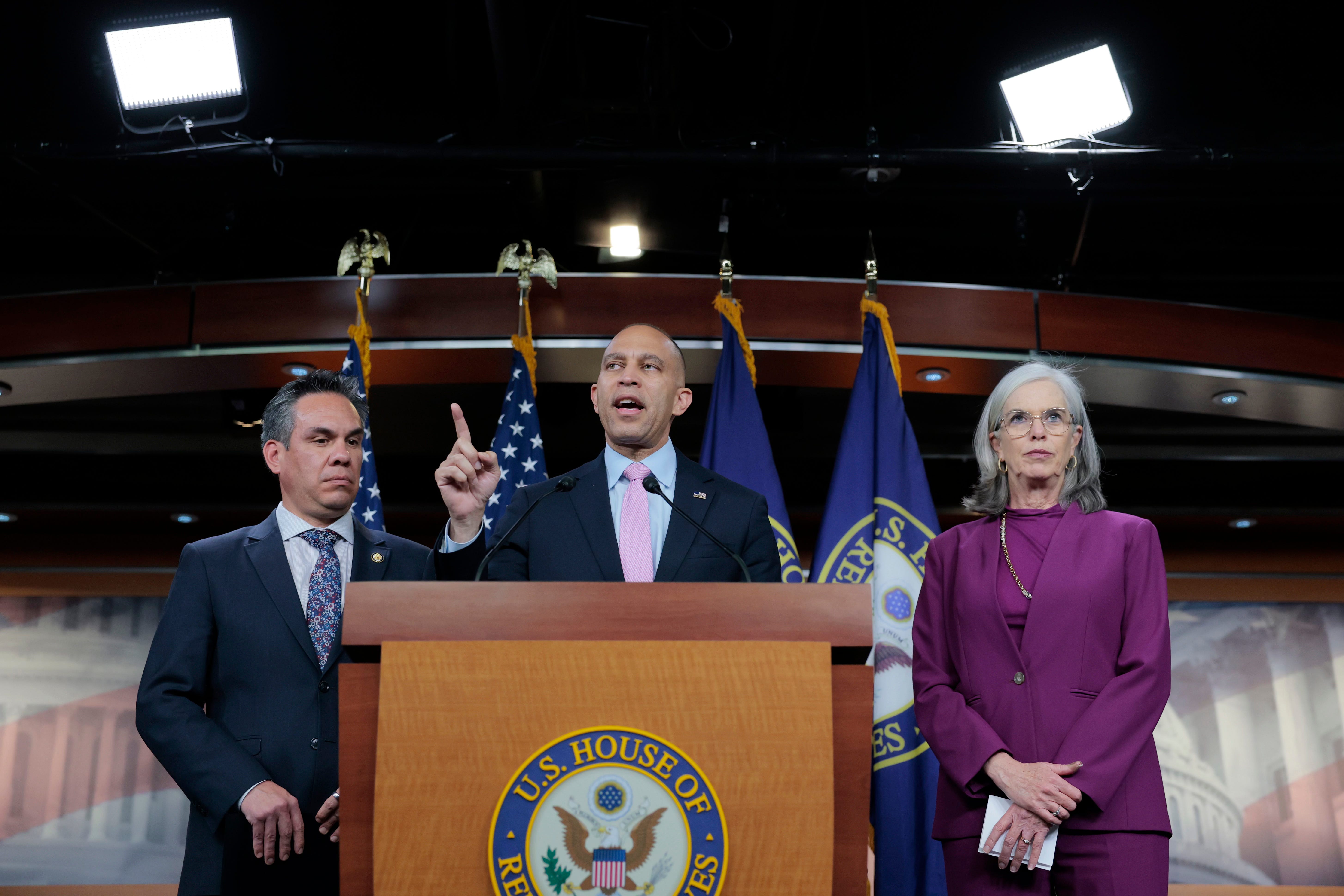
Now we have a midnight deadline, with the Senate scheduled to vote at least one more time on the GOP funding plan that Democrats have continuously rejected. The House of Representatives is not currently in session, but it will be a late night in the US Senate. The US Senate has already begun today’s session, where Democrats will spend a significant amount of time explaining why they refuse to back down to Republican demands. Chuck Schumer has just made the following statement: “Republicans have chosen the losing side of the health care debate,” as he presents his arguments to avoid the impending health care crisis.
At some point, Republican leadership will call a vote on both the House-passed Continuing Resolution (CR) 5371, which provides for continuing funding for the 2026 fiscal year by appropriating funds for federal agencies, providing additional funding for security for federal officials, and extending various expiring programs and authorities. Democrats will also call a vote again for their own counter-proposal, which links funding the government through October for ACA health care subsidy assistance and places limits on Donald Trump’s ability to roll back funds previously approved by Congress unilaterally.
Neither of these bills is expected to pass, and once they fail, the Senate has the option of holding several procedural and “show” votes through the midnight deadline. It is a vote taken for political strategy rather than to pass legislation. A procedural vote is a formal part of the legislative process that determines the rules, order of business, or terms of debate, rather than directly deciding the merits of a bill. A “show vote” is a political strategy typically scheduled by the majority party to put opposing members on the record regarding a specific issue, often for campaign talking points and to highlight a political contrast with the opposing party.
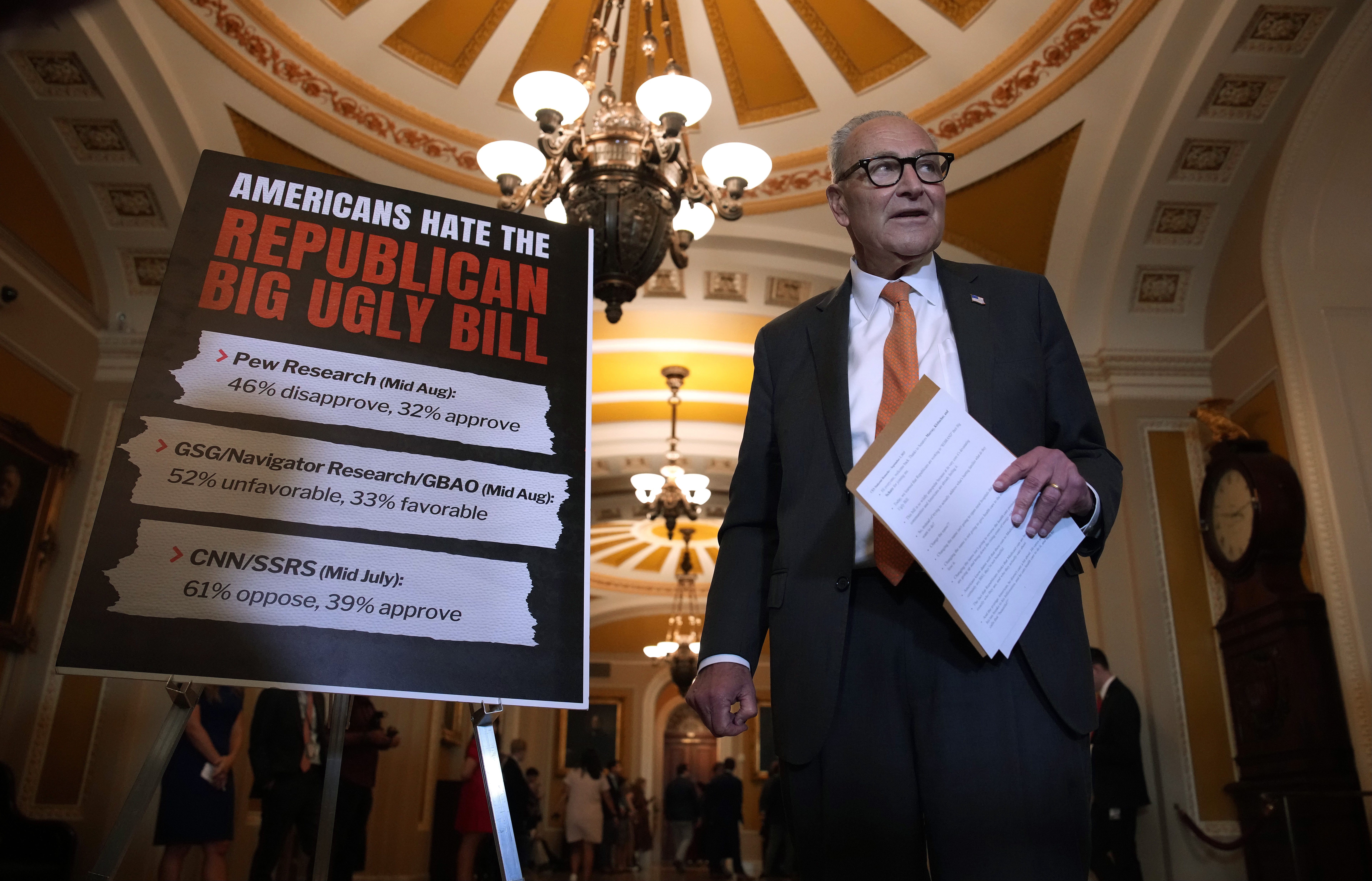
If Republicans are stupid enough to call for a show vote, they will only be hurting themselves, as the most pressing concern for most Americans, according to recent surveys, is healthcare and its affordability. Chuck Schumer just ended his floor speech by saying “Americans are on our side,” and polling seems to prove that point overwhelmingly. Republicans have stuck to their erroneous messaging that providing health care subsidies for Americans means funding healthcare for illegal immigrants, but the truth in this statement will be apparent during the next Midterm Election, especially if 22 million people lose access to their healthcare.
Once government funding officially expires at 12:01 a.m. on Oct. 1, anything deemed nonessential will be put on hold, which could mean that some Americans might experience delays with certain services, and some federal workers will go without pay. The Supplemental Nutrition Program for Women, Infants, and Children (WIC) food program will be significantly impacted by a shutdown, but the program is also set to lose substantial funding under the current terms of the Republican CR. Ultimately, funding will depend on whether states choose to utilize other contingency funds to sustain WIC in the long term.
Funding for the Supplemental Nutrition Assistance Program (SNAP), formerly known as food stamps, will last longer but could be impacted if the shutdown continues for an extended period. Federal workers and active-duty military service members will not receive a paycheck during a government shutdown, which means federal employees will miss their first paycheck on Oct. 24, while the military will not get paychecks starting on Oct. 15. It is important to note that federal employees and military members will get back pay once the shutdown is resolved.
Trump has made a point of threatening mass layoffs of more federal employees in the event of a shutdown. Considering how many federal workers have already been fired by the Trump administration, this appears to be an advantageous time for Democrats to call his bluff. National Park access will be tricky. During the 2018-2019 shutdown, the Trump administration kept national parks accessible to the public, while National Park Service employees were forced to stay home, but a Government Accountability Office opinion (GAO) in September 2019 found that the Trump administration violated federal law when it used entrance fees to keep the parks accessible.
Most employees who remain at the Federal Emergency Management Agency (FEMA) after Trump has substantially purged the agency are considered exempt and will be available for any emergency or disaster. The irony in FEMA staying afloat is that the primary funding source for the organization, the Disaster Relief Fund, is running dangerously low and requires congressional approval for additional funds; therefore, the shutdown might actually be a better way to protect FEMA employees.
Each state is impacted differently by a federal shutdown, depending on its federal workforce and reliance on National Parks. States like Alaska and Oregon have thousands of federal workers, with each agency having its own set of protocols during a shutdown. States like Colorado and California rely tremendously on their National Parks and their ongoing accessibility. Democratic Colorado Governor Jared Polis has confirmed that Colorado is evaluating its options and would be a “willing partner if needed to use limited State funds to keep our biggest park fully operational if necessary.” Democratic California Governor Gavin Newsom has taken a different approach, stating that he does not support a shutdown and blames Republicans for the impasse.
Air traffic controllers and most Transportation Security Administration employees are considered “essential workers” and have to stay on the job. The US Postal Service will continue to deliver mail as usual in the event of a shutdown. USPS is primarily self-funded and doesn’t depend on the appropriations process to continue running normally. Ahead of potential past shutdowns, the National Weather Service has stated that it will continue to provide routine forecasts, as well as extreme weather watch and warning information. For most Americans, the initial impact of a federal shutdown will not be too severe. While this could be seen as “the best worst decision,” for many, the reality is that for most Americans, who rely on their health insurance and medical facilities and hospitals, retreating on essential funding through a shutdown is the only way forward.
Amee Vanderpool writes the SHERO Newsletter, is an attorney, published author, contributor to newspapers and magazines, and an analyst for BBC radio. She can be reached at avanderpool@gmail.com or follow her on Twitter @girlsreallyrule.
Paid subscriptions and one-time tributes embedded in each article allow me to keep publishing critical and informative work that is sometimes made available to the public — thank you. If you like this piece and want to support independent journalism further, you can forward this article to others, get a paid subscription or gift subscription, or donate as much as you like today.