
What is Trump Really Threatening with the Insurrection Act?
Following another shooting, Trump has threatened to invoke the Insurrection Act, calling legal protestors "professional agitators and insurrectionists," but what can we really expect?

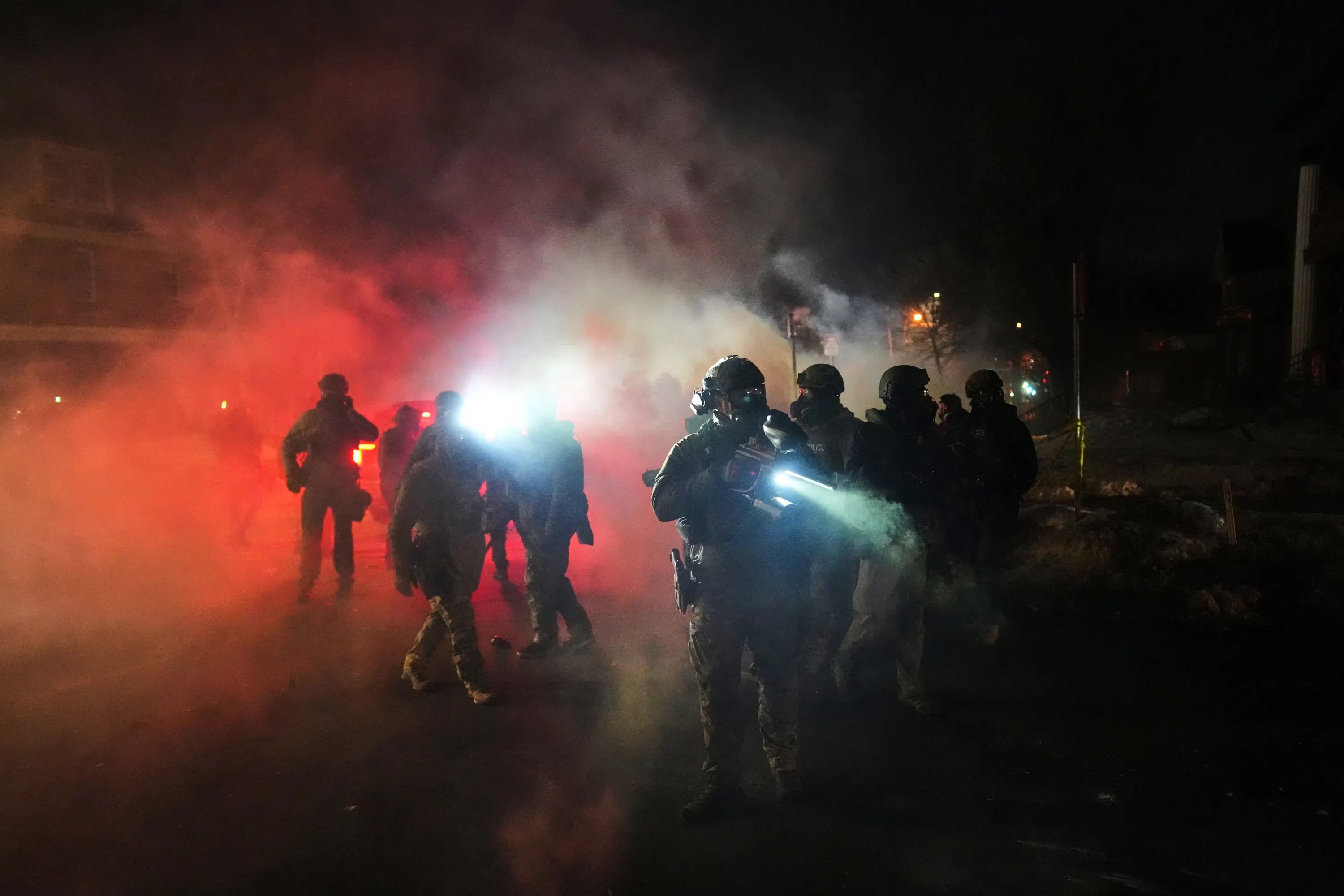
Last night, another federal officer shot a man in the leg during an enforcement operation in north Minneapolis, igniting more protests in a city that has been brutalized since a federal agent shot Renee Good three times in the face and then tried to claim self-defense. Several hundred protesters gathered at the scene on Wednesday night to stand up to federal agents as local law enforcement was deployed to the area to quell any additional violence and de-escalate the situation.
The President of the United States took another tack and posted a statement on his social media platforms that accused local Minnesota politicians of unsubstantiated corruption saying: “If the corrupt politicians of Minnesota don’t obey the law and stop the professional agitators and insurrectionists from attacking the Patriots of I.C.E, who are only trying to do their job, I will institute the INSURRECTION ACT, which many Presidents have done before me, and quickly put an end to the travesty that is taking place in that once great State.”
This is not the first time Trump has threatened to employ this tactic, so let’s take a moment to discuss the exact legal nature of this inflammatory threat and whether there is anything or anyone that can stop him from abusing his power again. The Insurrection Act of 1792 grants the president the authority to deploy the US military domestically and use it against Americans under certain, rare conditions. But the law itself is very dangerous because it has not been updated recently, and its express language is very broad.
Often called the “Insurrection Act of 1807,” the law is actually a series of statutes, or individual laws, enacted by Congress between 1792 and 1871 that make up 10 USC §§ 251-255. The Insurrection Act authorizes the president to deploy military forces inside the United States to suppress rebellion or domestic violence or to enforce the law in certain situations. The Posse Comitatus Act, created in 1878, is Latin for “power of the country,” and it was established to mobilize people to suppress “lawlessness.” The act is only one sentence long, and it means that members of the military who are subject to the law may not participate in civilian law enforcement unless “expressly authorized by the Constitution or Act of Congress.”

Although the Insurrection Act is very broad and appears to give substantial power to the Executive Branch, the Department of Justice further clarified the intent of the law in a 1964 memorandum that further attempts to clarify when this power may be invoked, and has become the long-standing barometer for when the act can be legally invoked. Arguing that the Insurrection Act is “limited . . . by the Constitution and by tradition,” then-Deputy Attorney General Nicholas deB. Katzenbach concluded that the law should be used in three circumstances:
When a state requests help in putting down an insurrection;
When deployment is needed to enforce a federal court order;
When “state and local law enforcement have completely broken down.”
While no federal or state law can override the US Constitution, the Insurrection Act specifically permits the use of troops to enforce established federal regulations or a limited number of state laws that are mostly limited to enforcing Civil Rights protections. This governing memo from the Department of Justice also specifies that federal troops are not to be used to combat street crime or any type of criminal activity governed by state and local laws.

Once again, the difficulty in stopping Donald Trump’s actions lies in the unprecedented scenarios in which the country has been intentionally placed to test the limits of executive power. Trump has previously deployed troops to several US cities, but those deployments were under another, more obscure law that regulates National Guard deployments. See, 10 USC § 12406. Following the US Supreme Court’s late December ruling that halted federal deployments in cities on the basis that federal officers could not act as law enforcement within a state, Trump withdrew troops from Chicago, Portland, and Los Angeles.
It is also important to note that Trump has used the City of Minneapolis as a test case of sorts to examine the extent of his powers, specifically under the Insurrection Act. Trump has made a point to loudly allege fraud in the state of Minnesota about day care center funding to pursue the “lawless state” image that best supports his abuse of power. By refusing to condemn the shooting of Renee Good and dismissing the chances of a credible and unbiased investigation into Good’s murder, Trump and his officials have intentionally thrown more fuel on the fire he set in the state himself.
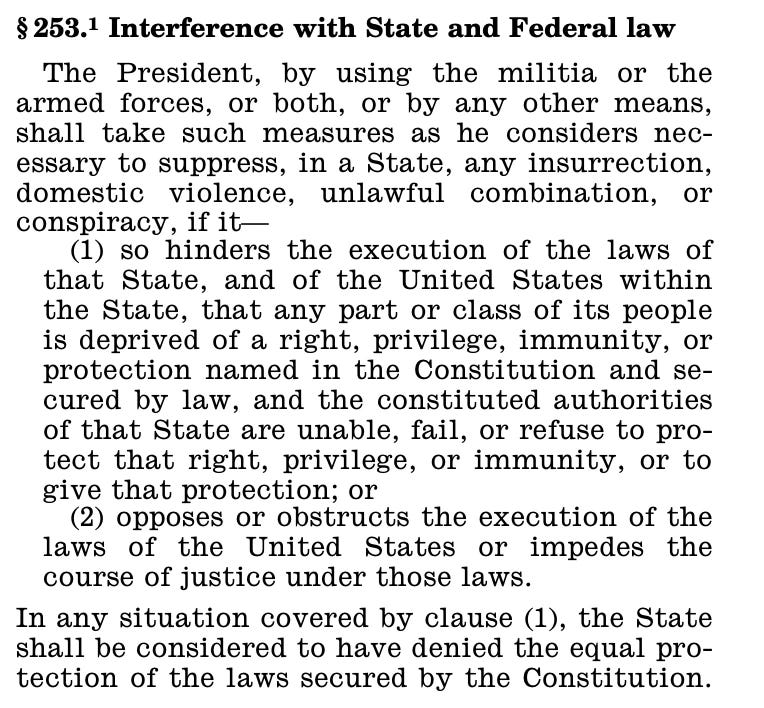
This latest threat to invoke the Insurrection Act is actually more of a tell that foreshadows the Trump administration’s next moves, and the risk of more violence only feeds Trump’s mission as he plans to argue that he had no choice but to take control of the “lawless state” if and when this issue ever makes it to the Supreme Court.
Donald Trump has recklessly accused the Governor of Minnesota of fraud, deployed unqualified, reckless officers all over the state, and continued to fan the flames of violence and incompetence by letting it be known that there will be no repercussions for federal officers who break the law. Until then, Trump is arguing the case solely in the court of public opinion, where the stakes have suddenly jumped another level, leaving everyone to brace themselves until the Midterm Elections in November.
Amee Vanderpool writes the SHERO Newsletter and is an attorney, published author, contributor to newspapers and magazines and analyst for BBC radio. She can be reached at avanderpool@gmail.com or follow her on Twitter @girlsreallyrule.
Paid subscriptions allow me to keep publishing critical and informative work that is sometimes made available to the public — thank you. If you like this piece and you want to further support independent journalism, you can forward this article to others, get a paid subscription if you don’t already have one or send a gift subscription to someone else today.